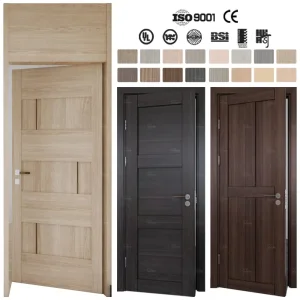
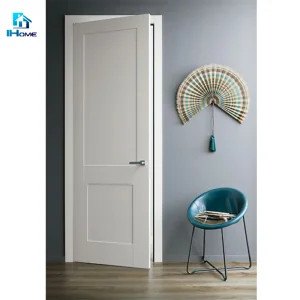
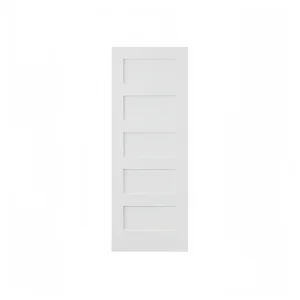
Engineered core interior doors tailored for Canberra's luxury apartments and modern townhomes, combining superior dimensional stability with flawless prime finishing.
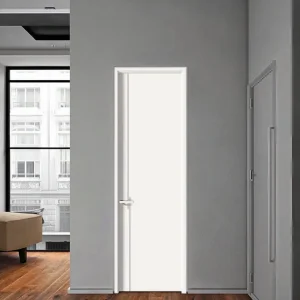
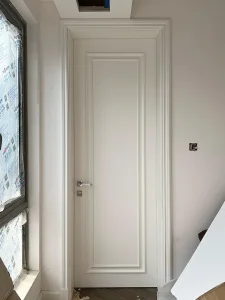
Canberra, the administrative heart of Australia, experiences unique meteorological dynamics characterized by cold, frosty winters and dry, scorching summers. Traditional solid timber joinery frequently falls victim to these extreme environmental fluctuations, experiencing dimensional warping, joint separation, and paint cracking. As ACT developers push the envelope under the Nationwide House Energy Rating Scheme (NatHERS) and strict National Construction Code (NCC) standards, the industry has migrated toward advanced engineered timber solutions.
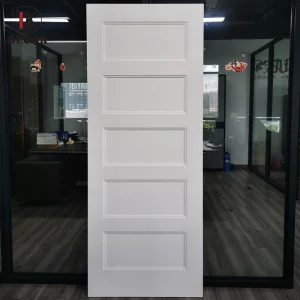
Our premium White Primed MDF (Medium-Density Fibreboard) Doors represent the pinnacle of structural stability. Constructed from high-density, refined wood fibres bonded under extreme heat and pressure with low-emission synthetic resins, these doors exhibit near-zero hygroscopic movement. By neutralizing the physical stresses of Canberra's dry winds and winter moisture, our doors maintain perfect plumb and alignment, reducing long-term builder maintenance liability.
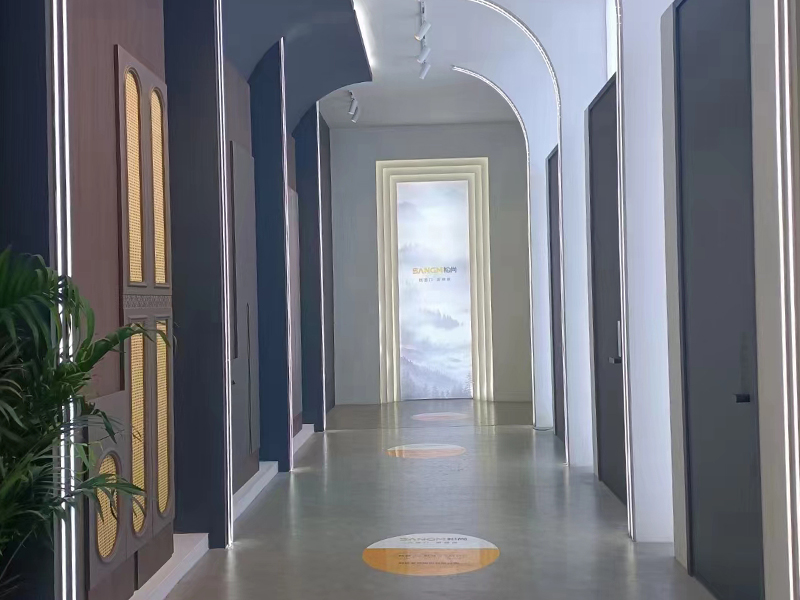
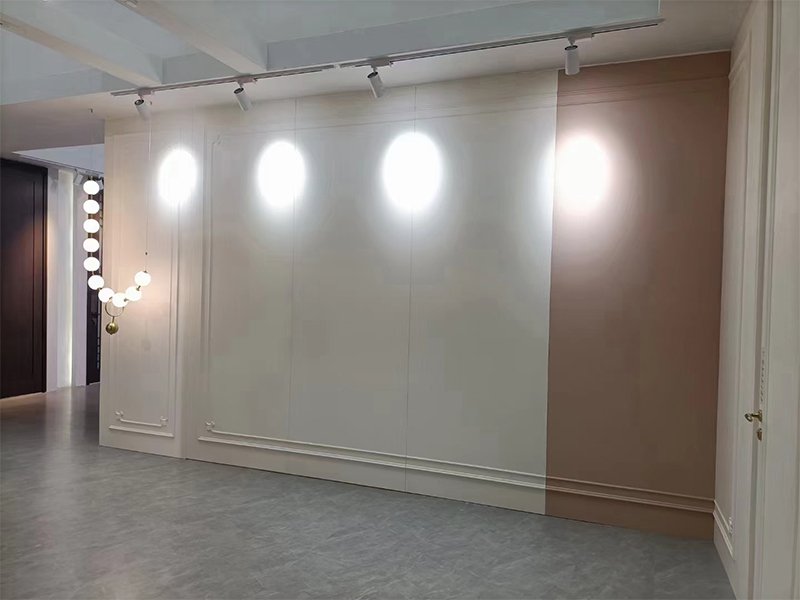
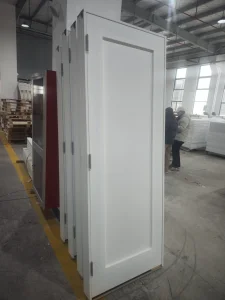
Guangzhou Weston Door Co., Ltd. was established in 2011, evolving into an elite wooden door manufacturer and exporter with global reach. Spanning a modern facility of over 50 acres, our complex houses high-end production workshops, automated paint-spraying lines, engineering offices, and a dedicated testing lab. Driven by four state-of-the-art fully automated production lines, we comfortably maintain a daily production volume of over 500 sets of doors, yielding an annual capacity exceeding 200,000 sets.
Quality is the cornerstone of the Weston Door ethos. Our system operates under strict ISO 9001 guidelines, complemented by an independent Quality Control (QC) department that monitors every step from MDF panel raw density calibration to final primer coating thickness. In close partnership with global logistics hubs, we guarantee timely and damage-free delivery to Canberra distributors, commercial contractors, and architectural joiners.
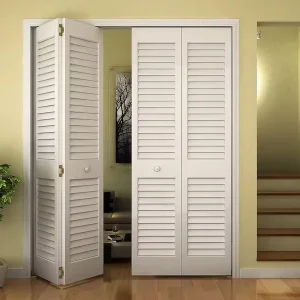
Designed for custom ventilation, high-traffic acoustic management, and specific local safety regulations within Canberra's commercial sectors.
Understanding the science behind Weston's engineered MDF doors: Density, moisture resistance, and acoustics.
Designed and manufactured to comply with Australian Standard AS 2688 for timber doorsets. Ideal for commercial projects requiring audited mechanical performance, including impact resistance tests and warp-tolerance certification.
Strict environmental testing ensures that our doors comply with the Green Building Council of Australia (GBCA) requirements. Using water-based, high-solid primers to achieve negligible volatile organic compound (VOC) emissions.
Our solid core structures achieve Rw acoustic insulation ratings up to 32dB with appropriate perimeter seals. This ensures acoustic privacy between corridors and bedrooms in busy high-density developments in ACT.
The lifetime performance of an interior door is heavily dictated by the initial factory primer coat. Weston Door employs a state-of-the-art, multi-stage roller and spray priming process. Each MDF slab undergoes precision sanding before a high-build, UV-cured acrylic primer is applied. This creates an impermeable barrier over the wood fibres, locking out moisture and preventing localized grain swelling. Contractors in Canberra report up to 40% reduction in onsite paint application costs due to our ultra-smooth, uniform surface prep that accepts all standard premium acrylic and polyurethane topcoats with superior adhesion qualities.
From solid core Shaker styles to budget-friendly hollow core honeycomb cores, our extensive catalog is optimized for ACT commercial and residential applications.
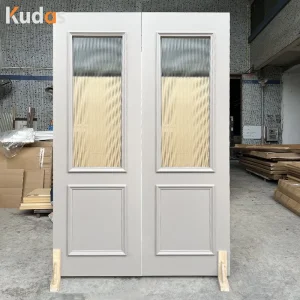
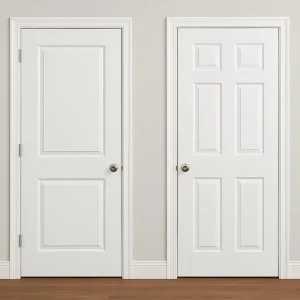
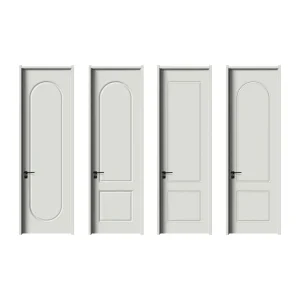
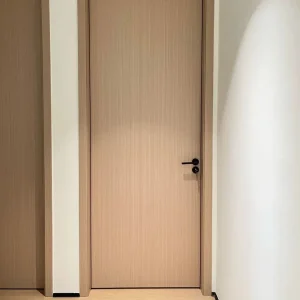
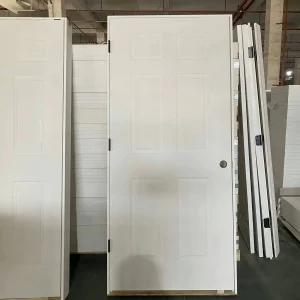
1. Material Engineering & Core Configurations: Our white primed MDF interior doors are fabricated in several specialized density variations to meet different architectural objectives. Solid-core designs utilize an ultra-dense, acoustic-dampening core composed of highly compressed wood fibers, achieving a density ranging between 720kg/m³ and 800kg/m³. This prevents cellular shifting under thermal pressure, providing an ideal substrate for architectural stability. For high-volume multi-residential projects where budget constraints are paired with high quality requirements, our honeycomb hollow core variants provide superior structural rigidity relative to their lightweight form factor, utilizing an internal cell-like matrix which distributes external impact forces evenly across the HDF skins.
2. Microclimate Performance in Canberra: Joiners and construction contractors in the ACT frequently face call-backs for door swelling in coastal-adjacent, high-altitude climates. Canberra's winter temperature drops to sub-zero levels with associated interior heating usage, which contrasts with summer peaks that regularly exceed 35°C with very low relative humidity. Under these environments, traditional timber doors split at the stiles and rails due to differential moisture release across the cellular grain. Our custom engineered MDF substrate is fully isotropic, possessing identical physical properties in all directions. This eliminates directional warp, keeping structural margins within the 2mm-3mm tolerances mandated by Australian residential construction codes.
3. The Multi-Coat Priming Advantage: The paint preparation process on site is one of the most labor-intensive aspects of joinery. Weston Door resolves this by applying a dual-coat, high-solid waterborne primer under factory conditions. Using specialized sanding machinery with multi-axis brushes, we eliminate micro-voids in the MDF surface before coating. The primer coating has an average Dry Film Thickness (DFT) of 60 microns, which acts as a barrier preventing topcoat absorption. Developers can proceed directly with their topcoat selection (acrylic, polyurethane, or oil-based) without requiring an undercoat, reducing finishing times by up to 50% on-site.
4. Future Technology & Carbon Footprint Reductions: Over the next three years, Weston Door is executing a production migration strategy targeting 100% bio-based resins to replace traditional urea-formaldehyde bonding systems. This ensures alignment with future ACT Government procurement requirements, which favor circular economy materials and ultra-low chemical emissions. Additionally, our automated waste reclamation systems feed wood waste back into our energy generation loop, minimizing scope 1 and scope 2 emissions throughout our manufacturing pipelines.
Detailed architectural answers regarding compliance, material testing, and installation standards in Australia.
Get in touch with our engineering support and sales division for direct factory pricing, custom design configurations, acoustic specification sheets, and logistical container-load schedules.
Send Inquiry Now Weston Door