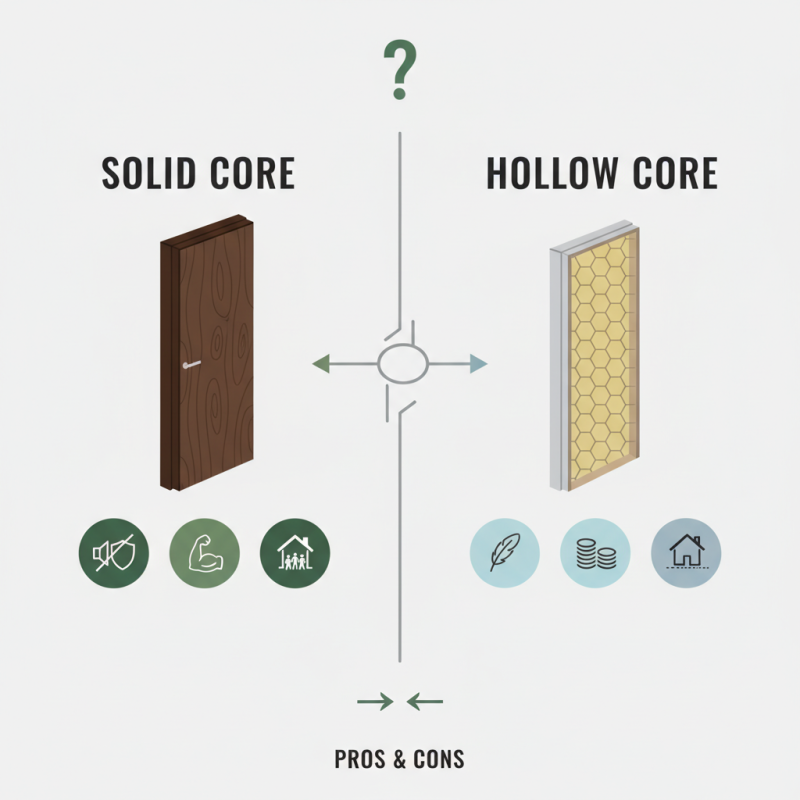
When considering door options for your home or office, you may wonder, "What is the difference between solid core and hollow core doors?" Understanding these differences can help you make informed decisions. Solid core doors are dense and robust, often made from solid wood or a composite material. They offer excellent sound insulation and durability. Many prefer them for high-traffic areas.
In contrast, hollow core doors are lighter and more affordable. They typically consist of a wooden frame with a honeycomb interior, making them less solid. While they may lack some durability, they are sufficient for interior use. Identifying the right door type can reflect your style and practicality.
Consider your needs carefully. Do you need soundproofing or just a lightweight option? Each type has its pros and cons, and what suits one space may not fit another. Ultimately, this choice carries more weight than it seems at first glance.
Understanding Solid Core Doors: Construction and Features
Solid core doors are constructed from a solid materials core, typically composed of particleboard or MDF. This core is surrounded by a veneer or a wood laminate. The solid core design provides enhanced durability and sound insulation compared to hollow core doors. They effectively reduce noise transmission, making them suitable for bedrooms or offices where privacy is essential.
The weight of solid core doors is noticeably heavier, which can impact installation and requires sturdy hinges. The extra weight often correlates with better quality and security. However, one must consider the potential for increased costs. Solid core doors tend to be more expensive than their hollow counterparts. Furthermore, they may not be ideal for all situations, particularly where lightweight options are needed.
In terms of aesthetics, solid core doors offer a rich, substantial feel. Their smooth finish can complement various design styles while providing excellent resistance to wear and tear. Despite their many benefits, they can present challenges in terms of installation and handling. It's worth reflecting on these aspects to choose the best door for your needs.
Exploring Hollow Core Doors: Design and Characteristics
Hollow core doors are popular choices in modern construction due to their blend of aesthetics and functionality. These doors are primarily constructed with a honeycomb core, making them lightweight while maintaining decent durability. The honeycomb structure allows for effective sound insulation, with some studies indicating a reduction in sound transmission by up to 25%. This aspect makes them suitable for residential homes and commercial spaces where privacy is a concern.
Design versatility is another key feature of hollow core doors. They can be finished in various styles, including wood veneer, laminate, or painted surfaces. According to the Door and Hardware Institute, around 75% of interior doors in homes are hollow core, reflecting their widespread acceptance. Despite their benefits, it’s important to note that hollow core doors might not provide the same level of security as solid core doors. This limitation can be a concern, especially for homeowners focusing on enhanced safety measures.
While these doors are affordable and easy to install, they may not hold up in high-impact scenarios. Homeowners should consider their specific needs before choosing. Reflecting on the longevity and resilience, some may find hollow core doors susceptible to damage from heavy-duty usage. Understanding these aspects will help in making an informed choice for any building project.
Comparison of Solid Core and Hollow Core Doors
Comparative Analysis: Insulation and Soundproofing Efficiency
When evaluating insulation and soundproofing efficiency, solid core doors have a notable advantage over hollow core doors. Solid core doors contain a dense core material, often made of composite wood or particleboard. This structure significantly enhances both thermal insulation and sound absorbance. According to a study published by the U.S. Department of Energy, solid core doors can reduce energy loss by up to 27% compared to their hollow counterparts.
In terms of soundproofing, solid core doors can provide a sound transmission class (STC) rating of 30 to 35. In contrast, hollow core doors typically hover around 20 to 25. This difference means solid doors can block more noise, creating quieter spaces in residential or commercial settings. For instance, the National Institute of Standards and Technology notes that reducing noise levels by just a few decibels can lead to improved focus and comfort in workspaces.
However, there are instances where hollow core doors might seem adequate. They are lighter and often less expensive. This can make them appealing for budget-conscious projects. Still, the long-term benefits of solid core doors in insulation and soundproofing often outweigh the initial savings of hollow cores. Reflecting on these factors is crucial when selecting the right door for specific needs.
Durability and Maintenance: Solid vs. Hollow Core Doors
When choosing between solid core and hollow core doors, durability and maintenance stand out as key factors. Solid core doors are heavier and denser, providing robust resistance to wear and tear. They excel in areas with high foot traffic, offering longevity that can be hard to match. Meanwhile, hollow core doors are lighter and easier to install, but they may not hold up as well in the long run, especially in terms of resistance to dents and damage.
Tips for maintaining doors are essential. For solid core doors, check for damages regularly. If you notice scratches or dents, sanding and refinishing may restore their appearance. On the other hand, hollow core doors often require less upkeep, but be vigilant about moisture exposure. A simple wipe-down can keep them fresh, but ensure you don’t let the humidity cause warping.
Both types have their strengths. Solid core doors may require more effort in upkeep, but their durability often outweighs this. In contrast, hollow core doors might need replacements sooner, especially in busy environments. Weighing your options based on usage patterns will guide you toward the right choice for your needs.
Cost Considerations: Price Differences and Value Assessment
When choosing between solid core and hollow core doors, cost is an important consideration. Solid core doors generally come with a higher price tag. Their construction involves denser materials, offering better durability and sound insulation. This can make a difference in residential settings, especially in noisy areas. Homeowners may appreciate the stability solid core doors provide over time.
Hollow core doors, while more affordable, may compromise on sound reduction. They are lighter and easier to handle, which is appealing for DIY projects. However, their construction leaves them less resilient compared to solid core options. Many people find they need to replace hollow core doors sooner, leading to increased long-term costs.
Budgeting for these doors requires careful thought. A solid core door might seem expensive upfront, but its longevity could justify the investment. Hollow core options seem like a bargain initially. Yet, the potential need for replacements cannot be ignored. Evaluating personal priorities will help determine which door type holds better value for your space.
FAQS
: They consist of a solid materials core, often particleboard or MDF, covered by a veneer or laminate.
They effectively reduce noise transmission, making them great for bedrooms or offices needing privacy.
Yes, they are noticeably heavier, impacting installation and requiring sturdy hinges for support.
They tend to be more expensive than hollow core doors, which can be a financial consideration.
Hollow core doors feature a honeycomb core that helps maintain decent durability while being lightweight.
They are affordable and easy to install, making them suitable for many residential and commercial spaces.
They can be susceptible to warping, so it’s important to be cautious about moisture exposure.
Check for scratches and dents; sanding and refinishing can restore their appearance when needed.
They may not hold up well in high-impact scenarios, requiring replacements sooner in busy areas.
Yes, they offer a rich feel and a smooth finish that complements various design styles.
Conclusion
When considering door options for your home or office, understanding the difference between solid core and hollow core doors is essential. Solid core doors are constructed with a solid wooden interior, offering superior insulation and soundproofing, making them a popular choice for spaces requiring privacy and durability. In contrast, hollow core doors feature a lightweight honeycomb or cardboard structure, making them more cost-effective but less robust in terms of sound insulation and durability.
In terms of maintenance, solid core doors typically require more care due to their weight and material, while hollow core doors are easier to handle and install. Cost considerations also play a significant role; solid core doors are generally more expensive but can provide better value in high-traffic or noise-sensitive areas. By evaluating these factors, you can make an informed decision on which type of door best meets your needs.

 Weston Door